Decoding Gold vs Silver vs the Dollar: The Big Game- Pravin Kaushal
Patna. JP News. Public discussion on money in India often begins and ends with a deceptively simple question: has the rupee strengthened or weakened against the US dollar? This narrow framing misses the deeper reality. What we are witnessing today is not routine currency fluctuation, but a slow and structural shift in the global monetary order—one that explains why gold is climbing, silver is surging, and the dollar’s long-standing dominance is being quietly reassessed.
To understand this transition, we must return to history.
When the Dollar Was Gold
After the Second World War, the global financial system was organised under the Bretton Woods framework. The US dollar was directly linked to gold, while other currencies were pegged to the dollar. This arrangement gave the dollar credibility, discipline, and stability—establishing it as the backbone of global trade.
That system ended abruptly in 1971, when the United States severed the dollar’s link to gold. The dollar became a fiat currency—valuable not because it was backed by a physical asset, but because the world continued to trust it. Over time, this trust was reinforced not by gold, but by financial infrastructure and geopolitical power.
By the mid-1970s, the transition was complete. Gold was removed from formal currency valuation, and international trade increasingly flowed through the dollar. Institutions such as the SWIFT system ensured that even trade between two non-US countries was routed through dollar-centric financial rails. This architecture allowed the US to exert extraordinary influence over global finance—without military intervention.
Dollar Power—and Its Limits
Dollar dominance was never purely economic; it was geopolitical. Control over global finance enabled sanctions, trade leverage, and strategic pressure. Countries attempting to bypass this system often faced economic retaliation or political instability.
Yet systems built primarily on trust, rather than tangible backing, are vulnerable to gradual erosion. Over decades, excessive money creation, repeated financial crises, and the increasing weaponisation of the dollar have weakened confidence in the existing order.
The Quiet Shift: Gold Returns
The turning point has not been dramatic—but deliberate. Rather than abandoning the dollar overnight, countries began diversifying risk. Central banks quietly resumed accumulating gold—not as a nostalgic relic, but as insurance against monetary instability.
The BRICS nations—Brazil, Russia, India, China, and South Africa—have been central to this shift. Trade in local currencies, bilateral settlement mechanisms, and steadily rising gold reserves all signal preparation for a future where value is not dictated by the dollar alone.
India and China, home to the world’s largest populations and fastest-growing markets, are especially significant. When major economies conduct trade without the dollar as an intermediary, its global grip weakens—even if exchange rates do not immediately reflect the change. This is why the dollar’s vulnerability is not visible in daily rupee movements. The transformation is structural, not cosmetic.
Gold as Monetary Insurance
Gold’s resurgence is often misunderstood as speculation or superstition. In reality, gold is finite, durable, universally recognised, and politically neutral. Central banks are not buying gold for short-term price gains; they are buying it because gold remains the only asset with no counterparty risk.
In effect, gold is reclaiming its historical role—not as everyday currency, but as the trust anchor behind currencies. As more nations accumulate gold, its rising value reflects rational risk management, not market irrationality.
Why Silver Is Different
Gold and silver are often grouped together, but their roles diverge sharply. Gold functions as monetary insurance. Silver, by contrast, is a strategic industrial metal—and its demand is accelerating.
Silver is the most efficient conductor of electricity. As the world electrifies, silver consumption is rising across electric vehicles, renewable energy, batteries, electronics, data centres, artificial intelligence infrastructure, and advanced defence systems. Unlike gold, silver is consumed. Once embedded in technology, it is rarely recovered, making long-term supply constraints increasingly significant.
This explains why silver prices are rising faster—and with greater volatility. Silver behaves less like currency and more like a critical industrial input.
Technology, Energy, and the Metal Future
The global shift away from fossil fuels intensifies these trends. Electrification demands not only power generation but transmission, storage, and efficiency. While silver dominates high-performance applications, copper forms the backbone of electrical infrastructure—from grids and wiring to motors and industrial equipment.
Copper’s role is quieter but no less strategic. It links decarbonisation, industrial growth, and national security, making it a key metal in the coming decades.
Beyond Speculation
What sets this moment apart from past commodity cycles is that demand is driven by long-term structural forces: geopolitics, technology, and energy transition. This is not a story of quick profits or speculative frenzy. It is about how value is stored, transmitted, and protected in a changing world.
Markets may fluctuate, but the underlying direction is clear. Asset-backed value is regaining importance. Physical scarcity matters again.
The Bigger Picture
The rise of gold, silver, and strategic metals is not a rejection of modern finance—it is a correction within it. Fiat systems function best when anchored in credibility. When trust erodes, tangible assets regain relevance.
This transition will not be sudden. The old and new systems will coexist for years. But the trajectory is unmistakable. Gold is not rising because of fear; it is rising because the world is rebalancing risk. Silver is not rallying on hype; it is responding to industrial reality.
Reducing this historic shift to daily price charts misses the larger game entirely.
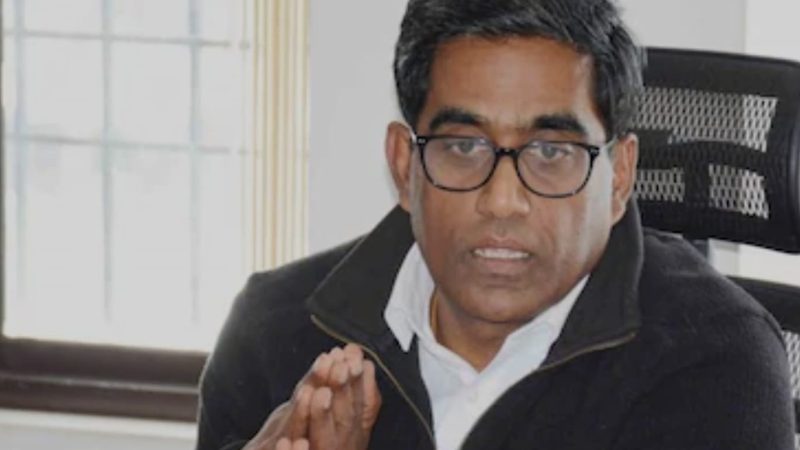
By Pravin Kaushal
Tech and social entrepreneur; Director, Mrikal (AI/Data Center); Young Alumni Member, Govt. Liaison Task Force, IIT Kharagpur. Working on scalable solutions to address India’s air pollution.